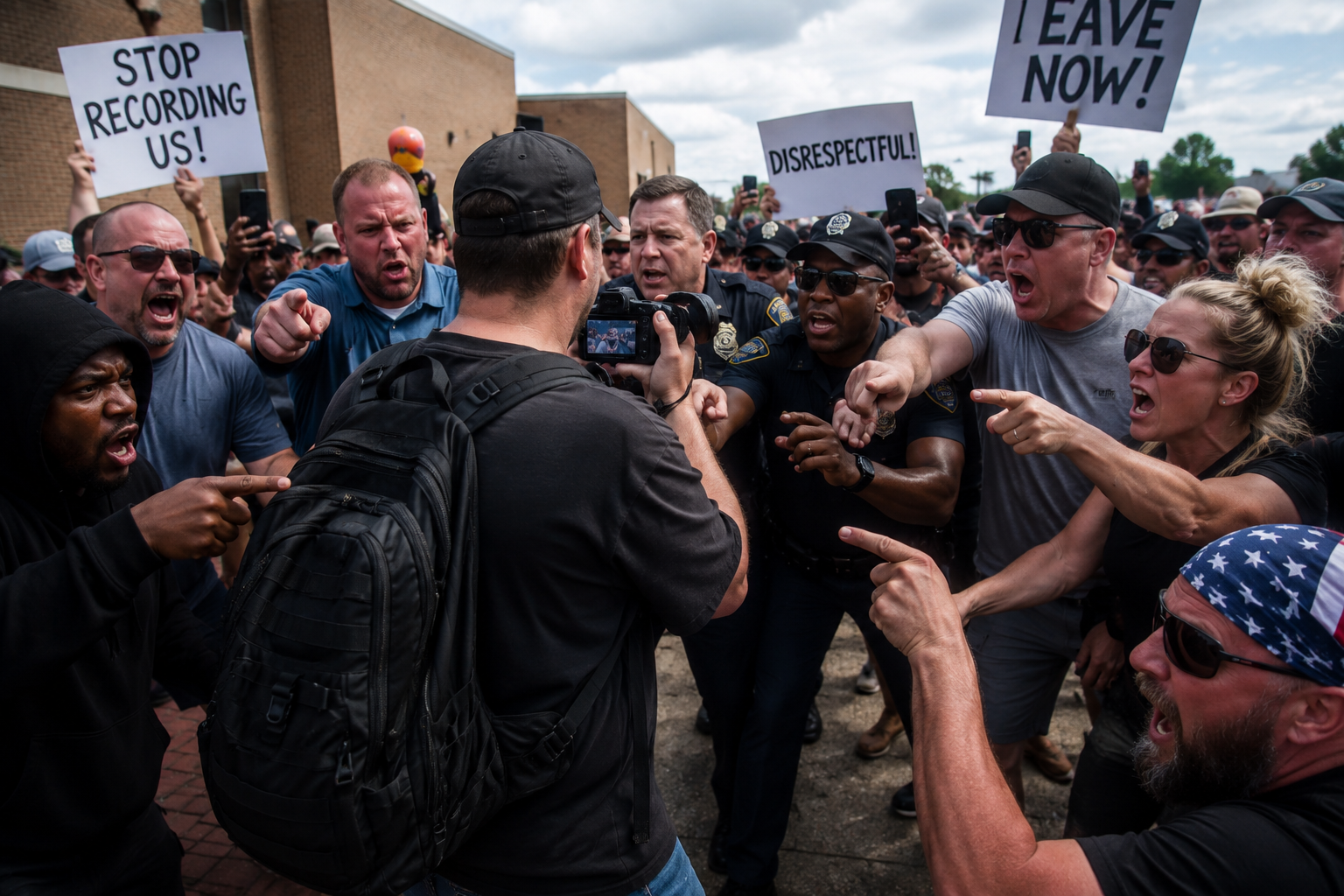
Across the United States, a growing number of independent activists known as “auditors” have taken to streets, sidewalks, post offices, police stations, and government buildings armed with cameras — and sometimes firearms — to test the limits of constitutional rights. Their videos rack up millions of views online, sparking debates about freedom, accountability, and public conduct.
Whether praised as watchdogs or criticized as agitators, First and Second Amendment auditors have become a modern symbol of constitutional activism in America.
What Is a First Amendment Auditor?
A First Amendment auditor is typically someone who records video in public places to test whether government officials and law enforcement respect the public’s constitutional right to film in public.
The First Amendment protects:
- Freedom of speech
- Freedom of the press
- Freedom of assembly
- Freedom to petition the government
Auditors often visit:
- Police departments
- Post offices
- City halls
- Public sidewalks
- Courthouses
- Government offices
Their goal is usually simple: document how officials react to citizens exercising lawful rights.
Supporters argue these audits:
- Increase transparency
- Hold public officials accountable
- Educate citizens about constitutional rights
- Expose unlawful behavior
Critics say some auditors intentionally provoke confrontations to generate viral content and advertising revenue online.
The Legal Right to Record in Public
Courts across the country have repeatedly upheld the public’s right to record government officials performing duties in public spaces, especially law enforcement officers.
Important legal principles include:
- There is generally no expectation of privacy in public.
- Photography and video recording are protected expressive activities.
- Government employees cannot usually demand deletion of footage without a warrant.
However, rights are not unlimited. Auditors can still face lawful restrictions involving:
- Trespassing
- Restricted federal areas
- Interference with investigations
- Disorderly conduct
The line between lawful observation and obstruction often becomes the center of heated encounters.
Second Amendment Auditors
A newer trend involves Second Amendment auditors — individuals openly carrying firearms while recording interactions with police and the public.
These activists focus on testing:
- Open carry laws
- Police knowledge of firearm statutes
- Citizens’ right to bear arms
Some states allow open carry without permits, while others have strict firearm regulations. As a result, Second Amendment audits can quickly become tense.
Supporters believe these audits:
- Defend constitutional freedoms
- Prevent unlawful stops or seizures
- Educate the public on firearm laws
Critics argue:
- Openly carrying firearms during audits can escalate situations
- It may alarm the public unnecessarily
- Some actions blur the line between activism and intimidation
Social Media and Viral Audits
Platforms like YouTube, TikTok, and Facebook have fueled the growth of auditing culture. Many auditors build large audiences by posting raw footage of confrontations with officials.
Common video themes include:
- “Know your rights” education
- Police accountability
- Public photography disputes
- Open carry encounters
- Government transparency
Some channels generate significant revenue through:
- Advertising
- Donations
- Merchandise
- Livestream contributions
This has led critics to question whether certain audits are motivated more by profit than principle.
The Public Debate
The debate surrounding auditors reflects a broader national conversation about liberty, authority, and accountability.
Many Americans believe:
- Constitutional rights must be actively exercised to remain protected.
- Public officials should expect scrutiny while on duty.
- Citizen journalism plays a vital role in a free society.
Others feel:
- Some audits intentionally create conflict.
- Harassment disguised as activism damages public trust.
- Respect and professionalism should go both ways.
The reality is often somewhere in the middle. Some auditors focus heavily on education and lawful activism, while others rely on confrontation to gain attention online.
Why Auditing Continues to Grow
In an era where nearly everyone carries a camera in their pocket, public oversight has become decentralized. Citizens no longer rely solely on traditional media to document interactions with government agencies.
Auditors see themselves as:
- Independent watchdogs
- Constitutional activists
- Citizen journalists
Their supporters argue that constitutional rights only remain strong when ordinary people exercise them publicly and consistently.
Love them or hate them, auditors have become a visible part of modern American constitutional culture — and they are unlikely to disappear anytime soon.